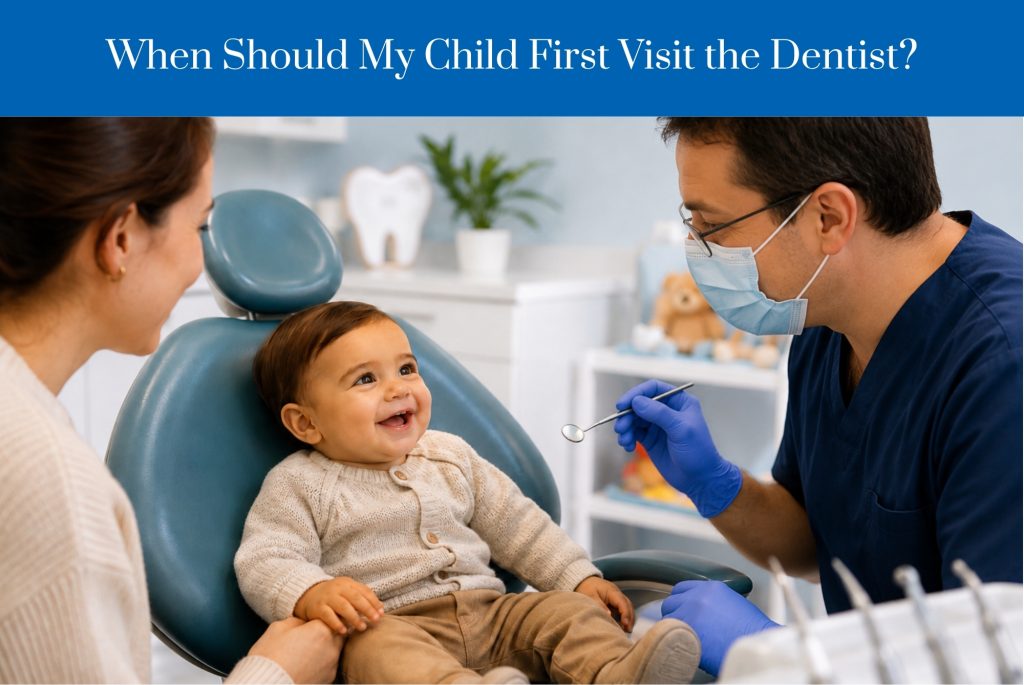
One of the most common questions new parents ask about their child’s oral health is, “When should my child first visit the dentist?” The answer is earlier than many families expect. The American Academy of Pediatric Dentistry (AAPD) recommends establishing a dental home by 12 months of age, with the first dental examination occurring when the first tooth erupts and no later than the child’s first birthday.
For families in Pinole and the surrounding East Bay communities, an early relationship with a pediatric dentist can provide valuable guidance during an important period of dental development. Gary D. Sabbadini, D.D.S., is a Board Certified Specialist in Pediatric Dentistry whose Pinole practice provides dental care for infants, children, adolescents, and patients with special health care needs.
The Recommended Age for a Child’s First Dental Visit
First Tooth or First Birthday: Whichever Comes First
A practical guideline for parents is to schedule their child’s first dental appointment when the first tooth appears or by 12 months of age at the latest.
The AAPD specifically recommends establishing a dental home within six months of the eruption of the first tooth and no later than 12 months of age. The American Academy of Pediatrics also supports a dental visit by age one.
This recommendation is important because baby teeth can develop decay relatively soon after they erupt. A first visit is therefore not simply about treating existing dental problems. It is an opportunity to establish preventive habits, assess a child’s individual risk factors, and give parents evidence-based guidance for caring for developing teeth.
Why Does My Baby Need a Dentist So Early?
Baby Teeth Matter From the Beginning
Primary teeth, commonly called baby teeth, play important roles during childhood. Healthy teeth allow children to chew comfortably and contribute to normal oral development. Primary teeth also maintain space as a child’s mouth develops and permanent teeth eventually begin to emerge.
Dental decay can begin during early childhood. The goal of an early pediatric dental visit is to identify risks before they develop into more extensive problems.
The AAPD emphasizes early prevention because early childhood caries is a significant chronic disease that can result from an imbalance of multiple risk and protective factors over time. Its preventive recommendations include early establishment of a dental home, oral hygiene guidance, caries-risk assessment, and dietary counseling.
Prevention Is Easier Than Treating Advanced Dental Problems
An age-one dental visit gives parents an opportunity to learn how to protect their child’s teeth before cavities or other problems become established.
The AAPD notes that early dental visits allow dentists to educate families about infant oral hygiene, fluoride, dietary practices, cavity risk, oral habits, and dental injury prevention. Early examinations can also identify dental disease while conservative preventive or nonsurgical approaches may still be possible.
This prevention-focused approach can help families establish healthy routines that continue throughout childhood.
What Is a Dental Home?
Establishing an Ongoing Relationship With a Pediatric Dentist
A “dental home” refers to an ongoing relationship between a dentist and patient that provides comprehensive, accessible, coordinated, and family-centered oral health care.
The AAPD recommends establishing this relationship no later than 12 months of age. A dental home can provide preventive care, assessment for oral diseases, individualized preventive recommendations, guidance regarding growth and development, and care for dental pain, infection, or trauma.
Establishing a dental home early also means parents know where to turn when questions or unexpected dental concerns arise.
What Happens at a Baby’s First Dental Appointment?
A Gentle Introduction to Pediatric Dental Care
An infant’s first appointment is typically focused on prevention, examination, education, and helping the child and parent become comfortable with dental care.
Depending on the child’s age, development, and individual needs, the pediatric dentist may evaluate the teeth, gums, bite, and developing oral structures.
The appointment also gives parents an opportunity to discuss questions about brushing, fluoride, feeding habits, teething, pacifiers, thumb sucking, dental injuries, and other concerns.
Cavity Risk Assessment
Children do not all have the same risk of developing tooth decay. Dietary habits, oral hygiene, fluoride exposure, existing dental findings, and other individual factors can influence cavity risk.
An early assessment helps the pediatric dentist develop preventive recommendations appropriate for the individual child. The AAPD identifies individualized caries-risk assessment as an important component of a child’s dental home.
Parent Education
Parents perform most of an infant or toddler’s daily oral care, making caregiver education particularly important.
A pediatric dental visit can provide practical guidance about how to brush emerging teeth, how much toothpaste to use, what dietary habits can increase cavity risk, and what parents should watch for as additional teeth erupt.
How Should I Care for My Baby’s Teeth at Home?
Begin Oral Care Early
Good oral hygiene should begin before a child can brush independently.
According to the AAPD, parents can clean an infant’s gums with a soft infant toothbrush or cloth and water. Once teeth erupt, parents should brush the teeth twice daily using a tiny smear—approximately a rice-grain-sized amount—of fluoride toothpaste and an age-appropriate soft toothbrush. For children ages three to six, the recommended amount increases to a pea-sized quantity.
Parents should actively perform or supervise brushing while their child develops the coordination and consistency necessary to brush effectively.
Pay Attention to Diet and Frequent Sugar Exposure
What a child eats and drinks—and how frequently the teeth are exposed to sugars—can influence cavity risk.
Parents can discuss bottles, breastfeeding, snacks, juice, sweetened beverages, and other feeding practices with their pediatric dentist. Individualized dietary counseling is particularly useful because recommendations can take a child’s age, development, nutritional needs, and dental risk into account.
Why Choose a Pediatric Dentist for Your Child?
Specialized Training for Children
Pediatric dentists receive specialty education after dental school focused on caring for infants, children, adolescents, and patients with special health care needs.
Dr. Gary Sabbadini completed a two-year specialty training program in pediatric dentistry at Children’s Hospital in Cincinnati, where he served as Chief Resident during his second year. His Pinole practice identifies him as a Board Certified Specialist in Pediatric Dentistry.
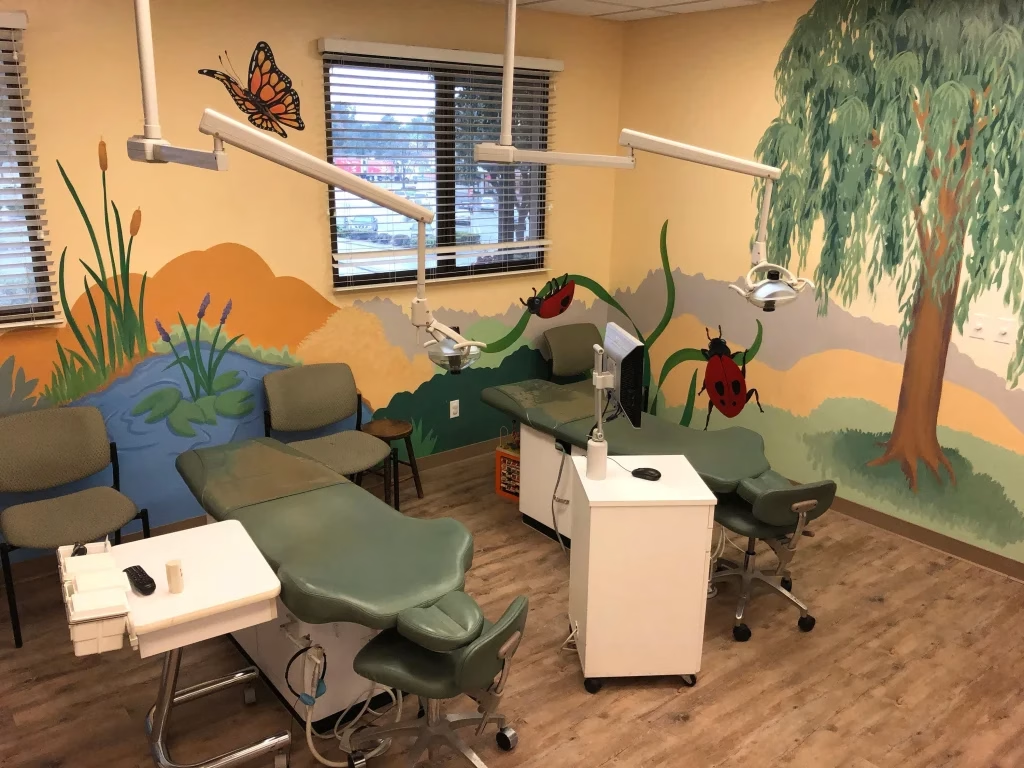
A pediatric dental environment is also designed around the developmental and behavioral needs of younger patients.
Pediatric Dental Care in Pinole, California
Dr. Sabbadini’s office has served children in Pinole and surrounding East Bay communities since 1999. The practice provides preventive, restorative, emergency, and orthodontic dental care for infants, children, adolescents, and patients with special needs.
Establishing care early allows families to build familiarity with the dental team while giving the dentist an opportunity to follow the child’s oral development over time.
When Should You Schedule an Earlier Dental Evaluation?
Do Not Wait Until the First Birthday If You Notice a Problem
The first-birthday recommendation is the latest suggested time for a routine first visit—not a reason to delay care when a concern is present.
Parents should contact a pediatric dentist when they notice something unusual involving their child’s teeth, gums, mouth, or oral development. Concerns may include visible changes to a tooth, suspected decay, pain, swelling, an injury, or other symptoms.
Dental trauma and signs of infection warrant timely professional evaluation rather than waiting for the child’s routine first appointment.
How Often Should Children Visit the Dentist After Their First Appointment?
Follow a Schedule Based on Your Child’s Needs
After establishing a dental home, continuing preventive appointments allows the dentist to monitor oral development and identify changes early.
The AAPD’s parent guidance notes that dental checkups every six months are commonly recommended, while emphasizing that the appropriate frequency should be determined according to the individual child’s oral health.
Children with elevated cavity risk or specific dental conditions may need a different schedule.
Helping Your Child Develop a Positive Relationship With Dental Care
Make Dental Visits a Normal Part of Growing Up
Beginning dental visits during infancy can help make the dental office a familiar part of a child’s healthcare routine.
Parents can support a positive experience by using simple, encouraging language and avoiding frightening descriptions of dental treatment. Treat the visit as a normal healthcare appointment rather than something a child should fear.
Early visits also allow the dental team to get to know your child before urgent treatment is ever needed.
Frequently Asked Questions About a Child’s First Dental Visit
When should my child first visit the dentist?
Your child should have a first dental examination when the first tooth erupts and no later than 12 months of age. The AAPD recommends establishing a dental home by the child’s first birthday.
What if my baby does not have any teeth by age one?
The first birthday remains an important milestone for establishing a dental home. A pediatric dentist can evaluate oral development and provide individualized preventive guidance even when tooth eruption is later than expected.
Why does my child need a dentist if there are no cavities?
Preventing disease is one of the primary purposes of early pediatric dental care. A first appointment can include an oral examination, cavity-risk assessment, oral hygiene instruction, dietary counseling, and guidance about your child’s dental development.
Are baby teeth really important if they eventually fall out?
Yes. Primary teeth are important for comfortable chewing and normal oral development, and problems affecting baby teeth can cause pain or infection. Keeping primary teeth healthy is an important part of maintaining a child’s overall oral health.
When should I start brushing my baby’s teeth?
Begin brushing as soon as the first tooth erupts. The AAPD advises using a tiny smear of fluoride toothpaste and an age-appropriate soft toothbrush for children younger than three.
How much toothpaste should I use for my toddler?
For children younger than three, use approximately a rice-grain-sized smear of fluoride toothpaste. For children ages three to six, use a pea-sized amount while an adult performs or assists with brushing.
How often should I brush my child’s teeth?
The AAPD recommends brushing baby teeth twice daily with an appropriate amount of fluoride toothpaste once teeth begin erupting.
Should I wait until all of my child’s baby teeth come in before scheduling an appointment?
No. Waiting until all primary teeth have erupted is much later than recommended. The first examination should occur with eruption of the first tooth and no later than 12 months of age.
What is early childhood caries?
Early childhood caries is tooth decay affecting young children. The AAPD recognizes it as a significant chronic disease and recommends preventive strategies including early dental care, appropriate oral hygiene, fluoride exposure, caries-risk assessment, and dietary guidance.
Can a pediatric dentist help with thumb sucking or pacifier habits?
Yes. Oral habits and their potential effects on developing teeth and jaws can be discussed during pediatric dental appointments. The dentist can monitor your child’s oral development and provide age-appropriate recommendations.
Does my child need dental X-rays at the first visit?
Not every child automatically needs dental radiographs at the first appointment. The need for imaging depends on the child’s age, dental development, clinical findings, risk factors, and individual circumstances. The pediatric dentist can determine whether radiographs are appropriate.
How often should my child see a pediatric dentist?
Many children receive checkups approximately every six months, but visit frequency should be individualized according to the child’s oral health and risk factors.
What should I do if my child has a dental problem before age one?
Contact a pediatric dentist rather than waiting for the first birthday. Dental pain, swelling, trauma, suspected infection, or visible tooth problems deserve professional evaluation.
How can I prepare my child for a first dental visit?
Keep explanations simple and positive. Avoid words or stories that could create unnecessary anxiety. For infants and young toddlers, much of the first appointment focuses on examination and parent education, so parents do not need to extensively prepare the child beforehand.
What should I bring to my child’s first dental appointment?
Have relevant medical and dental information available, including medications, allergies, health conditions, and insurance information when applicable. Parents may also want to prepare questions about brushing, fluoride, diet, teething, oral habits, or anything they have noticed about their child’s mouth.
Start Your Child’s Dental Care by Age One
The answer to “When should my child first visit the dentist?” is straightforward: when the first tooth appears and no later than the first birthday.
Early pediatric dental care is about much more than checking for cavities. It establishes a dental home, gives parents reliable preventive guidance, identifies individual risk factors, and creates an opportunity to monitor a child’s teeth and oral development from the beginning.
If your baby has a first tooth—or is approaching their first birthday—it is an appropriate time to establish care with a pediatric dentist.
Contact Information
Gary D. Sabbadini, D.D.S.
Board Certified Specialist in Pediatric Dentistry
1500 Tara Hills Dr., Suite 100
Pinole, CA 94564
(510) 724-4400
Website: pinolepediatricdentist.com
Dr. Sabbadini’s pediatric dental office provides care for infants, children, adolescents, and patients with special health care needs in Pinole and surrounding East Bay communities.