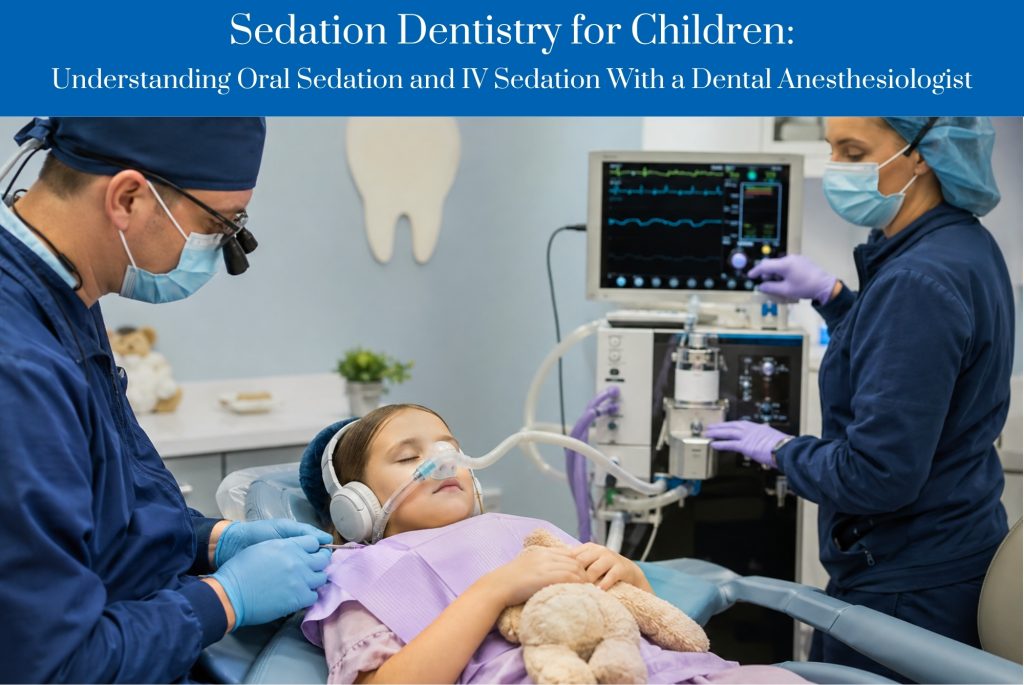
For some children, receiving dental care can be difficult because of anxiety, fear, a sensitive gag reflex, difficulty remaining still, special healthcare needs, or the complexity of the treatment they require. Pediatric sedation dentistry can help make necessary dental procedures more manageable while allowing the dental team to focus on providing careful, efficient treatment.
At the pediatric dental office of Gary D. Sabbadini, D.D.S. in Pinole, California, sedation options may include oral sedation and, when appropriate, IV sedation with a dental anesthesiologist. The appropriate approach depends on the individual child, including age, health history, anxiety level, ability to cooperate, and the type and extent of dental treatment needed.
Sedation should never be viewed simply as a way to make a child “sleep through” dentistry. Pediatric sedation exists on a continuum and requires careful patient selection, preparation, monitoring, recovery, and professional judgment. The American Academy of Pediatric Dentistry (AAPD) and American Academy of Pediatrics (AAP) emphasize presedation health evaluation, appropriate fasting when indicated, airway assessment, trained personnel, physiologic monitoring, appropriate recovery facilities, and recovery to an acceptable level before discharge.
What Is Pediatric Sedation Dentistry?
Pediatric sedation dentistry uses medications to reduce anxiety, movement, awareness, or discomfort so that dental treatment can be completed safely and effectively. The depth of sedation can vary substantially depending on the technique, medication, dosage, patient, and procedure.
The goals of pediatric procedural sedation include protecting the child’s safety and welfare, reducing discomfort and anxiety, minimizing psychological trauma, controlling movement when necessary for safe treatment, and allowing the patient to recover sufficiently before discharge.
Sedation is not one standardized experience. A child receiving oral sedation may have a very different level of awareness and responsiveness than a child receiving deeper IV sedation under the care of a dental anesthesiologist.
Why Might a Child Need Sedation for Dental Treatment?
Many children can successfully receive dental treatment using communication, reassurance, distraction, and age-appropriate behavior guidance. Sedation may be considered when those approaches alone are unlikely to allow necessary care to be completed comfortably and safely.
A pediatric dentist may discuss sedation when a child experiences significant dental anxiety or fear, has difficulty cooperating because of age or developmental considerations, requires extensive treatment, cannot remain still enough for safe care, has a strong gag reflex, has had difficulty tolerating previous dental treatment, or has special healthcare considerations that make conventional treatment challenging.
The decision is individualized. Sedation that is appropriate for one child may not be appropriate for another child who needs the same dental procedure.
Oral Sedation for Pediatric Dental Care
Oral sedation involves administering sedative medication by mouth. Depending on the medication, dose, and individual response, it can reduce anxiety and make a child more relaxed or drowsy during treatment.
Unlike IV administration, oral medication must first be absorbed through the gastrointestinal system. Consequently, the onset, depth, duration, and individual response can vary.
What Does Oral Sedation Feel Like?
Children respond differently to sedative medications. A child may become calmer, less anxious, sleepy, or less aware of the dental procedure. Some children remember portions of their visit, while others may remember relatively little.
Parents should not assume that oral sedation always causes sleep or that a child who appears sleepy is under general anesthesia. Sedation occurs along a continuum, and a patient’s level of sedation can change during a procedure. Pediatric sedation guidelines therefore emphasize appropriate monitoring and the ability of trained professionals to recognize and manage changes in sedation depth.
When May Oral Sedation Be Considered?
Oral sedation may be considered for children who need more anxiety control than routine behavior-guidance methods can provide but whose individual circumstances do not necessarily require a deeper anesthetic technique.
The decision depends on factors such as the child’s medical history, age and developmental level, anxiety and cooperation, anticipated length of treatment, amount of dentistry required, airway considerations, and previous experiences with dental or medical procedures.
A consultation with the pediatric dentist is necessary to determine whether oral sedation is appropriate.
IV Sedation With a Dental Anesthesiologist
For children who require a greater degree of sedation or who have treatment needs that make other approaches less suitable, IV sedation with a dental anesthesiologist may be considered.
IV means intravenous. Medication is administered through a vein, allowing the anesthesia professional to administer and adjust medications according to the patient’s needs and intended depth of sedation.
When deep sedation is used in children, comprehensive physiologic monitoring becomes particularly important. Current AAP/AAPD guidance calls for continuous observation and monitoring appropriate to the sedation level, with heart rate, respiratory rate, blood pressure, oxygen saturation, and expired carbon dioxide documented at defined intervals during deep sedation. The guidance also states that capnography should be used for almost all deeply sedated children because of the increased potential for airway or ventilation compromise.
What Does a Dental Anesthesiologist Do?
A dental anesthesiologist is a dentist with advanced education and training focused on anesthesia and sedation for dental and related procedures.
When a dental anesthesiologist participates in a child’s treatment, that professional’s role centers on anesthesia management and monitoring while the pediatric dentist concentrates on completing the dental treatment.
This team-based approach separates the responsibilities of providing dental care and managing deeper levels of sedation or anesthesia.
Why Might IV Sedation Be Recommended?
IV sedation may be considered when a child has extensive dental needs, severe dental anxiety, significant difficulty cooperating, previous unsuccessful treatment attempts, difficulty tolerating lengthy procedures, or other circumstances in which the treatment team determines that a deeper level of sedation is appropriate.
It is not automatically the preferred choice simply because a child is nervous. The decision should follow an individualized assessment of the child’s health, airway, behavioral needs, treatment requirements, and overall risk-benefit profile.
Oral Sedation vs. IV Sedation for Children
Oral and IV sedation differ primarily in how medication is administered and in the degree of control clinicians have over administration and titration.
Oral Sedation
With oral sedation, medication is swallowed and absorbed by the body. It may be useful for reducing anxiety and improving cooperation in appropriately selected patients.
Because absorption occurs through the digestive system, the response to an oral medication can differ among children.
IV Sedation
With IV sedation, medication is delivered directly through intravenous access. This provides the anesthesia professional with direct control over medication administration.
Depending on the planned depth of sedation, IV sedation can be appropriate for children whose anxiety, behavioral needs, or amount of required dental treatment makes lighter approaches unsuitable.
Which Type of Sedation Is Better?
Neither option is universally “better.” The appropriate sedation plan is the one selected for the individual child’s medical status, dental needs, behavioral considerations, and anticipated procedure.
A pediatric dental evaluation allows the dentist and, when appropriate, the anesthesia professional to discuss the benefits, limitations, alternatives, and potential risks associated with each approach.
Safety in Pediatric Sedation Dentistry
Safety is the central consideration whenever a child receives sedation.
Sedation medications can affect consciousness, breathing, protective airway reflexes, and cardiovascular function. Even when a particular level of sedation is intended, a patient can sometimes become more deeply sedated than anticipated. The AAP and AAPD therefore describe pediatric sedation as a continuum and emphasize the importance of professionals being able to recognize and rescue a patient whose sedation becomes deeper than intended.
Presedation Health Evaluation
Before sedation, the dental team needs an accurate understanding of the child’s health.
Parents should provide complete information about prescription and over-the-counter medications, allergies, previous surgeries or anesthesia experiences, medical diagnoses, recent illnesses, respiratory conditions, sleep-related breathing concerns, and other relevant health information.
AAP/AAPD guidance recommends a health evaluation before sedation to establish the patient’s baseline condition and identify risk factors that might require additional evaluation or changes to the sedation plan.
Airway Evaluation
Airway assessment is an important component of pediatric sedation planning. Professional guidance specifically identifies a focused airway examination as part of the systematic approach to sedation because certain anatomical characteristics may increase the potential for airway obstruction.
Parents should therefore tell the dental team about concerns such as significant snoring, sleep-disordered breathing, previous airway problems, or complications during prior sedation or anesthesia.
Monitoring During Sedation
The amount and type of monitoring required depends in part on the intended depth of sedation. Pediatric sedation guidelines emphasize appropriate physiologic monitoring during the procedure and continued observation afterward.
Monitoring may include measures such as oxygen saturation, heart rate, respiratory rate, blood pressure, and, for deeper sedation, expired carbon dioxide and other parameters as clinically indicated.
Recovery and Discharge
Monitoring does not end simply because the dental procedure is complete.
Children need appropriate postsedation observation while the effects of medication diminish. Current pediatric sedation guidance emphasizes a properly equipped recovery area, recovery to an appropriate level of consciousness before discharge from professional supervision, and clear discharge instructions for the parent or caregiver.
Preparing Your Child for Sedation Dentistry
Following the dental and anesthesia team’s instructions precisely is an important part of preparing for sedation.
Follow Eating and Drinking Instructions Carefully
Parents will receive specific instructions concerning when their child must stop eating or drinking before the appointment when fasting is required.
Do not independently modify these instructions. Appropriate fasting for elective sedation is one of the safety measures identified in AAP/AAPD pediatric sedation guidance.
If your child accidentally eats or drinks during the restricted period, tell the dental team. Do not conceal it in an effort to avoid rescheduling treatment.
Tell the Office About Illness or Health Changes
Contact the dental office if your child develops a cough, cold, fever, congestion, breathing problem, vomiting, or another significant health change before a scheduled sedation appointment.
The clinical team can determine whether the change affects the planned treatment or sedation.
Discuss All Medications and Supplements
Provide an accurate list of everything your child takes, including prescription medications, nonprescription medications, vitamins, and herbal or dietary supplements.
Do not stop or administer medications differently before sedation unless instructed to do so by the appropriate healthcare professional.
Plan for Transportation and Supervision
Parents and caregivers should follow all transportation and postsedation supervision instructions provided by the office. A child may remain sleepy, less coordinated, or otherwise affected for a period after sedation, depending on the medications and procedure.
Follow the individualized discharge instructions regarding eating, drinking, activity, medication, and supervision.
Helping Children Develop Positive Long-Term Dental Experiences
Sedation dentistry is not simply about completing a single procedure. For some children, an appropriately planned sedation experience can provide access to necessary oral healthcare when anxiety, developmental limitations, behavioral challenges, or extensive treatment needs would otherwise make that care difficult.
At the same time, sedation does not replace preventive dentistry.
Regular dental examinations, professional cleanings, fluoride when appropriate, effective brushing with fluoride toothpaste, healthy dietary habits, and early treatment of developing problems can help reduce the likelihood that a child will require extensive dental procedures in the future.
Sedation Dentistry in Pinole, CA
Families considering pediatric sedation dentistry in Pinole should have an opportunity to understand why sedation is being recommended, which approach is being considered, what alternatives exist, how the child will be monitored, and what to expect before and after treatment.
Gary D. Sabbadini, D.D.S. can evaluate your child’s dental needs and discuss whether oral sedation or IV sedation with a dental anesthesiologist may be appropriate for the proposed dental treatment.
Because every child’s health and dental needs are different, information online should serve as education rather than a substitute for an individualized clinical evaluation.
Frequently Asked Questions About Pediatric Sedation Dentistry
Is sedation dentistry safe for children?
Sedation can be performed safely in appropriately selected pediatric patients when established safety principles and monitoring protocols are followed, but no sedation or anesthesia procedure is completely without risk. AAP/AAPD guidance emphasizes presedation evaluation, airway assessment, appropriately trained personnel, physiologic monitoring, recovery procedures, and discharge criteria.
Is oral sedation the same as general anesthesia?
No. Oral sedation describes the route by which a sedative medication is administered, while terms such as minimal, moderate, deep sedation, and general anesthesia describe levels along the sedation/anesthesia continuum. A child’s response depends on the medication, dose, individual physiology, and other factors.
Will my child be asleep during oral sedation?
Not necessarily. Some children become very sleepy, while others remain awake but calmer and less anxious. The intended and actual depth of sedation should be discussed with the dental team.
Is IV sedation the same as oral sedation?
No. Oral medication is swallowed and absorbed through the gastrointestinal tract. IV medication is administered through intravenous access and can be titrated by the anesthesia professional according to the treatment plan and patient response.
Why would a dental anesthesiologist be involved?
For cases involving deeper sedation or anesthesia, a dental anesthesiologist can focus specifically on anesthesia administration, patient monitoring, airway management, and recovery while the pediatric dentist performs the dental procedure.
How does the dentist decide whether my child needs sedation?
The decision can involve the child’s age, health history, developmental level, dental anxiety, cooperation, airway considerations, previous dental experiences, length and complexity of the procedure, and amount of treatment required.
Does every anxious child need sedation?
No. Many children can receive dental care successfully using communication and behavior-guidance techniques without sedative medication. Sedation may be considered when conventional approaches are insufficient for the child’s needs or the planned treatment.
Can my child eat before a sedation appointment?
Your child must follow the specific eating and drinking instructions provided by the dental or anesthesia team. Fasting requirements can vary according to the procedure and sedation plan. Never assume that instructions from a previous appointment apply to a new sedation appointment.
What if my child eats or drinks when they were supposed to fast?
Tell the dental team immediately. The clinical team needs accurate information to determine whether proceeding is appropriate.
What if my child gets sick before the appointment?
Contact the office and describe your child’s symptoms. Respiratory illnesses and other changes in health may affect sedation planning, so the dental or anesthesia team should decide whether treatment can proceed.
Should I tell the dentist about medications my child takes?
Yes. Provide a complete and accurate list of medications and supplements. Drug interactions and underlying medical conditions are important components of presedation assessment.
How is my child monitored during sedation?
Monitoring depends on the intended sedation depth and individual clinical circumstances. It can include continuous observation and measurements such as heart rate, oxygen saturation, respiratory rate, blood pressure, and expired carbon dioxide. Deep sedation requires particularly close monitoring under pediatric sedation guidelines.
How long does it take a child to recover from sedation?
Recovery time varies according to the medications used, depth and duration of sedation, procedure, and individual child. Children should meet appropriate recovery and discharge criteria before leaving professional supervision.
Can my child return to school or normal activities immediately?
Parents should follow the individualized discharge instructions given after treatment. Depending on the sedation technique and the child’s recovery, additional supervision and activity restrictions may be necessary for the remainder of the day.
What questions should parents ask before pediatric sedation?
Parents can ask why sedation is recommended, which level and method are planned, who will administer and monitor it, what preparation is required, what alternatives are available, what risks and benefits apply to their child, what monitoring will be used, and what recovery will involve.
Can children with special healthcare needs receive sedation dentistry?
Sedation may be an option for some children with special healthcare needs, but the decision requires individualized evaluation. Certain medical, developmental, airway, or medication-related considerations can alter sedation planning or indicate a need for additional consultation.
How can I learn whether oral sedation or IV sedation is appropriate for my child?
The first step is a pediatric dental evaluation. After reviewing your child’s dental needs, health history, behavior, anxiety, and proposed treatment, Dr. Sabbadini can discuss available options and whether consultation or treatment involving a dental anesthesiologist is appropriate.
Contact Information
Gary D. Sabbadini, D.D.S.
1500 Tara Hills Dr., Suite 100
Pinole, CA 94564
(510) 724-4400
Website: pinolepediatricdentist.com
Families interested in learning more about pediatric sedation dentistry, including oral sedation and IV sedation with a dental anesthesiologist, can contact the office to schedule an evaluation and discuss their child’s individual dental needs.